The Hidden Life of Domenico Ghirlandaio — Renaissance Master With Secrets You’d Never Expect
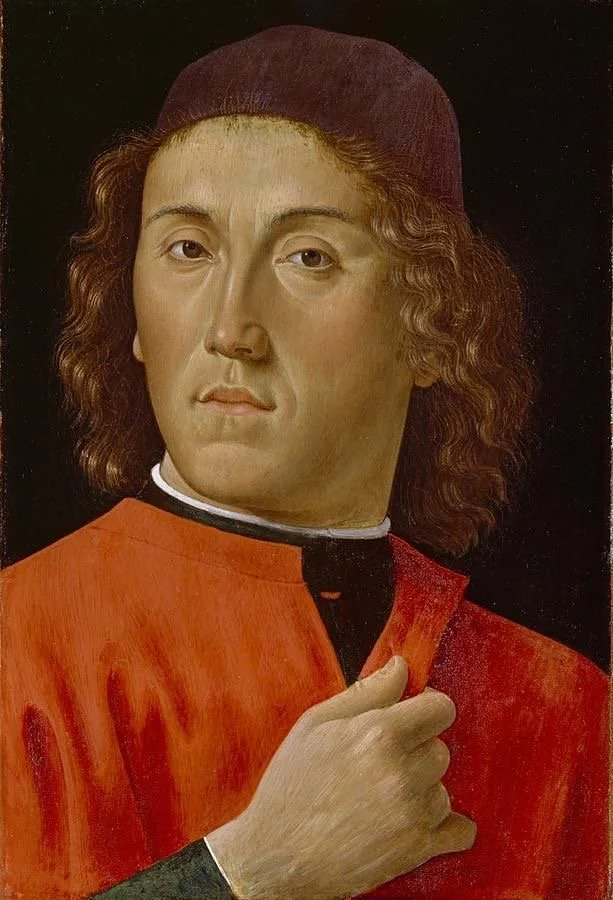
Domenico Ghirlandaio (1448–1494)
When most people think of Renaissance art, names like Michelangelo, Botticelli, or da Vinci rise to the surface. But behind those giants stands a man whose influence runs deeper than most realise — Domenico Ghirlandaio, the artist who shaped Florence’s artistic DNA long before it became fashionable.
And the truth is, Ghirlandaio wasn’t just another painter. He was a storyteller, a businessman, a bit of a rule-breaker, and a quiet genius whose fingerprints are all over Renaissance history… even if most people have no idea.
Let’s step into his world — and I promise, some of this will surprise you.
He Didn’t Start as a Painter — He Started as a Goldsmith
Before the frescoes, before the apprenticeships, before the fame… Ghirlandaio was trained to work with gold and metal. That early discipline shaped everything he later became.
Goldsmiths learn:
extreme precision
steady hands
flawless detailing
And if you look closely at Ghirlandaio’s paintings — especially the jewellery, fabrics, and delicate edges — you’ll see that metallic perfection everywhere. His nickname, “Ghirlandaio,” literally means “garland-maker,” a nod to the beautiful ornaments he crafted long before he picked up a brush.
He Snuck Real Florentines Into His Religious Paintings
Imagine walking into a church and spotting…
your banker,
your neighbour,
your rival
your ex-friend,
your business competitor
…all standing next to the Virgin Mary.
That’s what Ghirlandaio did.
He filled biblical scenes with real people from Florence — merchants, wealthy patrons, sometimes even people he disagreed with. These figures weren’t random; they paid to become immortal inside a religious story.
His frescoes were a blend of spirituality, politics, vanity, and community gossip, all wrapped in beautiful Renaissance colour.
He Painted People Exactly As They Were
Unlike some of his contemporaries, Ghirlandaio wasn’t interested in inventing perfect angels disguised as humans. He painted:
crooked noses
wrinkles
tired eyes
signs of age
skin conditions
odd facial features
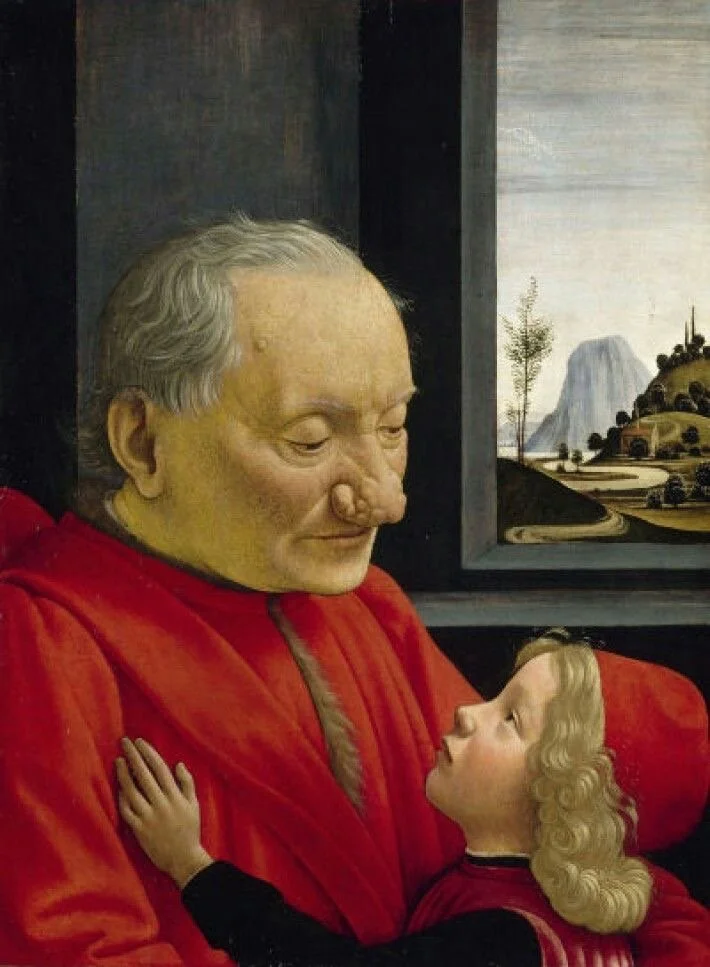
This wasn’t disrespect — it was honesty. His belief was simple:
A person’s story is written on their face. Why erase that?
This realism is one reason modern viewers feel such a strange connection to his work. His characters look like people you could pass on a street today.
He Was Michelangelo’s Teacher — and He Spotted His Talent Instantly
Michelangelo was only 13 when he entered Ghirlandaio’s workshop. Many masters would have felt threatened by such a gifted boy, but not Ghirlandaio.
He did the opposite:
He encouraged Michelangelo’s confidence.
He pushed him toward anatomy studies.
He let him explore sculpture, even though it meant sharing talent with other masters.
In a quiet but crucial way, he helped unlock Michelangelo’s future greatness.
Without Ghirlandaio, the Michelangelo we know today might never have emerged.
His Paintings Contain Early “Medical Records”
This is one of the strangest and most fascinating facts:
Doctors study Ghirlandaio’s frescoes.
Why?
Because he painted real medical conditions with remarkable accuracy — tumours, swelling, thyroid issues, unusual bone structures. At the time, nobody did this. Artists sanitised reality. He preserved it.
He unintentionally created a visual archive of the era’s health conditions, helping historians and medical scholars understand the past through art.
People Joked That He Must Have Had “Ten Hands”
Ghirlandaio’s speed was legendary.
Fresco painting is slow, tedious, and demanding — you can only paint on fresh wet plaster before it dries. Yet Ghirlandaio produced massive wall cycles at a pace that shocked other artists.
Rival painters whispered that he must have had:
multiple assistants working like ghosts,
or superhuman energy,
or simply too much ambition to sleep.
He was one of the most productive visual storytellers of his century.
He Recorded Florence Better Than Any Historian
Without Ghirlandaio, a huge part of Florence’s daily life would simply be lost.
His frescoes show:
clothing
architecture
everyday street scenes
real citizens
family dynamics
fashion trends
market culture
He basically created a Renaissance time capsule — one future generations rely on to understand Florentine life.
He Loved Hiding Tiny Personal Messages in His Art
Ghirlandaio enjoyed slipping:
political jokes,
subtle criticisms,
coded symbols,
inside references,
nods to rival workshops
into the background of his paintings.
He hid them well. Most people never notice them at all.
He was serious about his craft, but he also had a playful streak — a Renaissance artist with a secret sense of humour.
How Did Ghirlandaio Die?
Domenico Ghirlandaio died in 1494, most likely from a fever, possibly linked to the infectious illnesses circulating at the time.
He was only around 45–46 years old, but he left behind:
a wealthy workshop
a respected name
students who went on to define the next century of art
and a legacy much bigger than his short life
His brothers continued his workshop, but his personal touch — that mix of honesty, speed, and storytelling — was irreplaceable.
Why He Still Matters
Ghirlandaio may not be the loudest name from the Renaissance, but his influence is woven through:
Michelangelo’s early development
Florence’s visual history
the evolution of realism
and the artistic culture of the Medici-era city
He was the quiet architect of a movement that shaped Western art.
And the more you dig into his life, the more fascinating he becomes.